How I Found Calm and Strength with Simple Qigong Moves
For years, I felt constantly drained—mentally foggy, physically stiff, and emotionally off-balance. Then I discovered qigong, a gentle yet powerful practice rooted in traditional Chinese medicine. Unlike intense workouts, it didn’t wear me out; it recharged me. After just a few weeks of daily practice, I noticed real shifts: better sleep, sharper focus, and a sense of inner peace I hadn’t felt in years. This is the simple exercise plan that changed my life.
The Burnout That Led Me to Qigong
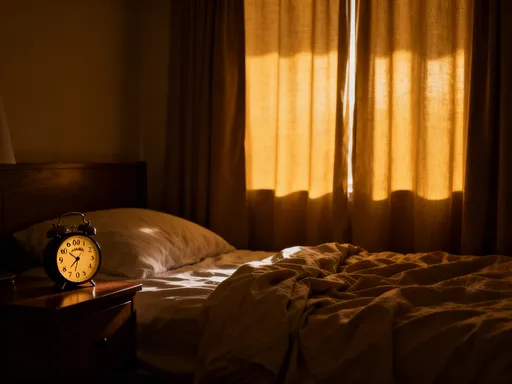
Modern life moves fast, and for many women in their 30s to 50s, the pace can feel relentless. Juggling work, family, household responsibilities, and personal well-being often leads to a quiet but steady erosion of energy. The exhaustion isn’t always dramatic—it builds slowly, like layers of dust settling on a windowsill. You wake up tired, push through the day with coffee, and collapse at night, only to repeat the cycle. This was my reality for years. I tried everything: high-intensity workouts, energy drinks, even prescription sleep aids. But nothing addressed the root of the problem—my body and mind were out of sync.
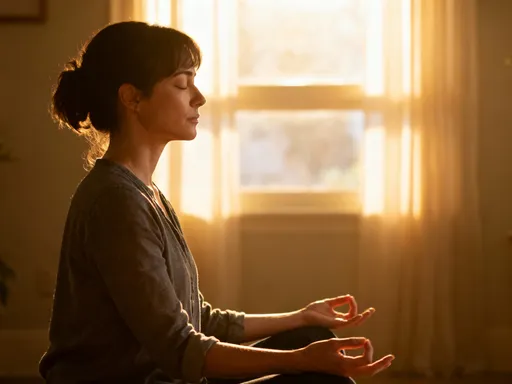
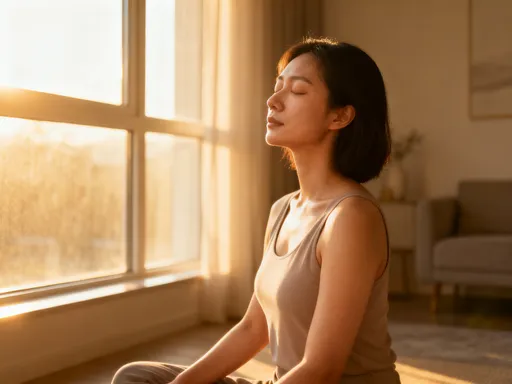
One winter morning, after missing my son’s school play due to a migraine, I hit a breaking point. I realized I wasn’t just tired—I was burned out. My body ached, my thoughts were scattered, and I felt disconnected from the joy of daily life. That’s when a friend gently suggested I try qigong. I was skeptical. The word sounded foreign, almost mystical. But I was desperate. I began with just five minutes a day, standing quietly in my living room, focusing on my breath. To my surprise, those few minutes created space in my mind. The noise quieted. For the first time in years, I felt present.
Unlike the gym routines that left me sore and drained, qigong didn’t demand more from me—it gave back. It wasn’t about pushing harder or achieving a certain look. It was about listening, restoring, and realigning. Over time, I began to understand that this wasn’t just another wellness trend. It was a centuries-old practice designed to support the body’s natural rhythms, not fight against them. And in a world that glorifies busyness, that kind of quiet restoration felt revolutionary.
What Qigong Really Is (And What It’s Not)
Qigong (pronounced “chee-gong”) is a mind-body practice that combines gentle movement, focused breathing, and intentional awareness. At its core, it’s about cultivating and balancing qi—the vital energy that flows through the body according to traditional Chinese medicine. But you don’t need to believe in energy systems to benefit from it. Think of it like tuning an instrument: when your breath, movement, and attention are in harmony, your entire system functions more smoothly.
It’s important to clarify what qigong is not. It’s not a religion, nor does it require any spiritual belief system. It’s not “slow dancing” or aimless waving of the arms—each movement has a purpose. And it’s not a substitute for medical treatment, though it can be a valuable complement to conventional care. Qigong is practical, accessible, and grounded in observable effects: reduced muscle tension, improved circulation, and a calmer nervous system.
The practice has been used for thousands of years in Chinese culture, not as performance, but as daily maintenance for health. Just as brushing your teeth prevents dental problems, regular qigong practice helps prevent the buildup of stress and stagnation in the body. It’s not flashy or fast, but its effects are profound. By synchronizing breath with slow, deliberate motions, you signal to your body that it’s safe to relax, to repair, to restore. This is especially important for women who spend so much of their energy caring for others—qigong is a rare opportunity to turn that care inward.
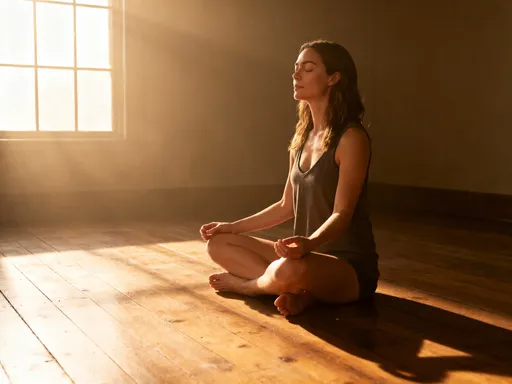
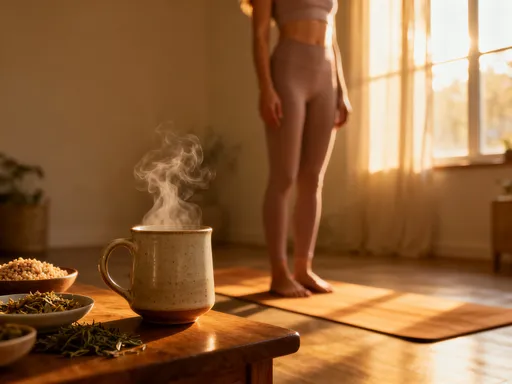
One of the most empowering aspects of qigong is its simplicity. You don’t need special equipment, a large space, or prior fitness experience. A quiet corner, comfortable clothing, and a willingness to slow down are all that’s required. Whether you’re recovering from illness, managing a busy schedule, or simply seeking more balance, qigong meets you where you are. It’s not about perfection—it’s about presence.
Why Modern Science Is Catching Up to an Ancient Practice
While qigong has deep roots in traditional healing, modern research is increasingly validating its benefits. Studies have shown that mind-body practices like qigong can significantly reduce levels of cortisol, the body’s primary stress hormone. In one clinical trial, participants who practiced qigong for eight weeks reported lower anxiety levels and improved mood compared to a control group. Another study found that regular practice was associated with better sleep quality and reduced fatigue in middle-aged adults.
Researchers believe these effects are due to qigong’s ability to activate the parasympathetic nervous system—the “rest and digest” mode that counteracts the constant “fight or flight” state many of us live in. By combining rhythmic breathing with gentle motion, qigong helps regulate heart rate, lower blood pressure, and improve oxygen flow to the brain. This creates a physiological shift that supports mental clarity and emotional stability.
Additionally, qigong has been studied for its impact on chronic pain, balance in older adults, and even immune function. While more large-scale research is needed, the existing evidence is promising. What’s particularly encouraging is that benefits are often reported after just a few weeks of consistent practice. Unlike pharmaceutical solutions that may come with side effects, qigong is low-risk and non-invasive. It doesn’t require a prescription or a doctor’s approval—just a few minutes of your time.
For women navigating hormonal changes, caregiving stress, or the physical demands of aging, this kind of self-regulation is invaluable. You don’t need to understand the science to feel the difference—many describe it as a deep sense of calm, a quieting of the mental chatter, or a return to feeling “like themselves” again. Science may be catching up, but the body has always known: slow, intentional movement is healing.
My 5-Minute Morning Routine That Sets the Tone for the Day
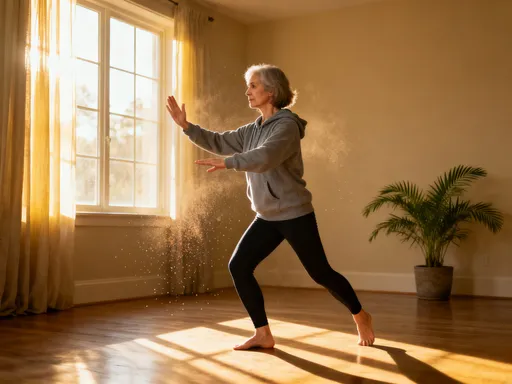
How you start your morning often shapes the rest of your day. Instead of reaching for your phone or rushing into chores, I now begin with three simple qigong movements. This five-minute routine takes me from groggy to grounded, preparing both body and mind for what lies ahead. I do it in my bedroom, barefoot on a rug, before anyone else is awake. It’s become my quiet promise to myself.
The first movement is called Standing Like a Tree (Zhan Zhuang). I stand with feet shoulder-width apart, knees slightly bent, arms rounded as if hugging a large ball. My spine is tall, shoulders relaxed, and gaze soft. I breathe slowly and deeply into my lower abdomen. This posture builds stability, improves posture, and calms the nervous system. It may look like doing nothing, but internally, it’s activating deep postural muscles and teaching the body to stand with ease.
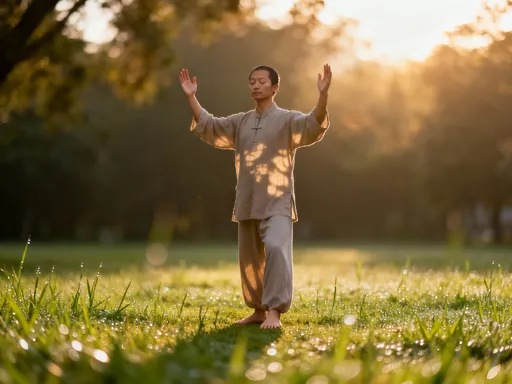
Next is Lifting the Sky. I inhale as I slowly raise my hands in front of me, palms up, all the way overhead. As I exhale, I lower them back down, palms facing inward. I repeat this five times. This movement stretches the spine, opens the chest, and encourages full diaphragmatic breathing. It feels like drawing energy up from the earth and releasing it to the sky—a symbolic reset for the day.
The third movement is Separating Heaven and Earth. One hand rises above my head, palm facing up; the other lowers to my side, palm down. I gently shift my weight side to side, imagining energy flowing between my hands. After five breaths, I switch sides. This movement promotes balance, improves circulation, and helps clear mental fog. Together, these three exercises take less than five minutes but create a powerful shift. I feel more alert, centered, and ready to face the day without rushing.
The Midday Reset: A 7-Minute Energy Boost Without Coffee
By mid-afternoon, many of us hit a wall. Energy dips, focus fades, and the temptation to reach for another cup of coffee or a sugary snack is strong. But caffeine often leads to a crash, leaving you more tired than before. My solution? A seven-minute qigong reset that I do at my desk or in a quiet corner of the office.
The first part is Shaking the Body. I stand with knees slightly bent and let my arms and shoulders go loose. Then, I gently bounce, allowing my whole body to shake—like a dog shaking off water. I do this for one to two minutes. It sounds odd, but it’s incredibly effective. Shaking releases muscle tension, improves circulation, and disrupts the stagnation that comes from sitting too long. It also brings a surprising sense of lightness and even laughter.
Next, I practice Microcosmic Orbit Breathing. I sit comfortably, spine straight, and focus on my breath. I imagine the inhale traveling up the spine, over the head, and down the front of the body. The exhale follows the same loop in reverse. I do this for five minutes, keeping the breath smooth and relaxed. This visualization helps integrate the nervous system and restore mental clarity. It’s not about forcing the energy—just gently guiding attention along a calming path.
Unlike a caffeine jolt, this reset doesn’t spike your system. Instead, it gently recharges you. I’ve noticed that after this short practice, my thoughts are clearer, my shoulders feel lighter, and I can return to tasks with renewed focus. Best of all, no one needs to know you’re doing it. You can wear work clothes, keep your shoes on, and do it in a bathroom stall if needed. It’s a private act of self-care in the middle of a busy day.
Winding Down with Evening Qigong for Deeper Rest
Evenings are when we finally slow down, but for many, that’s when the mind speeds up. Thoughts about the day’s unfinished tasks, tomorrow’s schedule, or long-term worries can keep us awake. That’s why I’ve made evening qigong a non-negotiable part of my routine. It signals to my body that it’s time to shift into rest mode.
I start with Moon Holding. I stand or sit comfortably and imagine holding a soft, glowing moon in front of my chest. My arms are rounded, palms facing inward, elbows relaxed. I breathe slowly, focusing on the gentle rise and fall of my hands with each breath. This movement activates the parasympathetic nervous system, slows the heart rate, and creates a sense of containment and safety. It’s a physical metaphor for holding yourself with care.
Then, I move into Abdominal Breathing with Visualization. I lie on my back, place one hand on my belly, and breathe deeply so my abdomen rises and falls with each breath. As I inhale, I imagine drawing calm into my body; as I exhale, I picture tension melting away. I continue for five to ten minutes. This practice enhances oxygen exchange, supports digestion, and prepares the body for deep sleep.
Since adding this routine, I’ve fallen asleep faster and wake up less often during the night. My husband has even commented that I seem “lighter” in the evenings. This isn’t about eliminating stress completely—life will always have challenges. It’s about giving your body the tools to recover from them. Evening qigong is like tucking yourself in, not just physically, but energetically.
Making It Stick: How to Build a Real-Life Qigong Habit
Starting is easy. Sticking with it is the real challenge. Like any new habit, qigong requires consistency, not perfection. The biggest obstacles I faced were lack of time, self-doubt, and impatience. I’d skip a day, then feel discouraged. Or I’d compare myself to videos of advanced practitioners and feel inadequate. Over time, I learned that progress in qigong isn’t measured in speed or flexibility—it’s measured in how you feel.
My first strategy was to start small. Instead of aiming for 30 minutes, I committed to just three minutes a day. Often, I’d end up doing more, but the low barrier made it easy to begin. I also paired qigong with existing habits—after brushing my teeth in the morning, before turning off the bedroom light at night. These anchors made it automatic.
I used phone reminders and a simple journal to track my practice. Not to count days, but to note subtle changes: “Slept better,” “Less shoulder tension,” “Felt calm during meeting.” These small wins built confidence. I also gave myself permission to modify movements. If standing was hard, I sat. If I was tired, I shortened the routine. Qigong is adaptable, not rigid.
Most importantly, I shifted my mindset. This wasn’t another chore to check off. It was an act of self-respect. For women who spend so much time giving—cooking, cleaning, comforting, organizing—qigong is a rare space where you receive. It’s not selfish. It’s necessary. When you care for yourself, you have more to give. And the more I practiced, the more I noticed its ripple effects: I spoke more calmly, listened more deeply, and moved through my days with greater ease.
Conclusion
Qigong didn’t transform me overnight, but it gave me tools to feel more grounded, energized, and present in everyday life. It’s not a cure-all, but a sustainable practice that fits into real routines. By blending ancient wisdom with modern understanding, this simple exercise plan offers something rare: wellness that feels good now—no extremes, no burnout, just balance. If you're tired of quick fixes that fade, maybe it’s time to try something gently powerful.