After Managing 300+ Trips Digitally: This Electronic Ticket Hack Saved Me Hours Every Month
How many times have you scrambled through your bag at the train station, only to realize your ticket is buried—or worse, lost? I’ve been there, stressed and flustering in front of the gate. But over the past few years, as I tracked hundreds of trips, something small made a huge difference: mastering electronic ticket management. It didn’t just save me time—it gave me peace of mind, reduced travel anxiety, and quietly boosted my daily productivity. Let me show you how this simple tech habit transformed not just my trips, but my work and personal life too.
The Moment I Knew I Needed a Change
It was a Tuesday morning, and I was rushing to catch an early flight for a client meeting. My daughter had woken up with a fever the night before, so I’d spent half the evening on the phone with the pediatrician, then stayed up repacking her school bag and writing her teacher an email. By the time I got to the airport, I was already drained. But the real disaster hit when I reached the boarding gate and realized I couldn’t find my boarding pass.
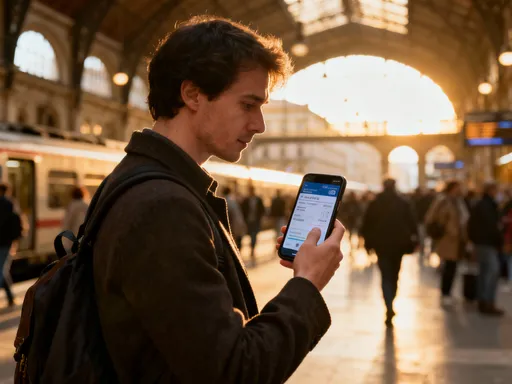
I pulled out my phone, heart pounding, and started swiping through my email inbox. Flight confirmation… hotel receipt… rental car reminder… but no boarding pass. I remembered checking in the night before. Where did it go? I tapped through folders—Promotions, Travel, Updates—muttering to myself, “It has to be here somewhere.” The gate agent gave me a polite but impatient look. I could feel the eyes of the other passengers behind me. When I finally found it—buried under a newsletter about travel rewards—I was sweating, embarrassed, and completely thrown off.
That moment wasn’t just about missing a shuttle or being late. It was about how much energy I’d wasted. I’d spent the first hour of my workday in panic mode, and it took me the entire flight to reset. That’s when I realized: my travel habits weren’t just inefficient—they were stealing my focus, my calm, and my confidence. I was treating each trip like a one-off emergency instead of part of a rhythm I could actually manage. And if I felt this way, I knew I couldn’t be the only one.
So I made a promise to myself: no more digging. No more stress over something as basic as a ticket. I wanted a system that worked whether I was traveling for work, planning a weekend with the kids, or meeting friends for a concert. I wanted to walk into any station, airport, or venue and know—without a second thought—that I had what I needed. That decision led me down a path of small but powerful tech changes that ended up reshaping my entire approach to daily life.
What Electronic Ticket Management Really Means (And Why It’s Not Just About Convenience)
When I first started looking into electronic ticketing, I thought it just meant having a PDF in my inbox. But I quickly learned it’s not about where you store a file—it’s about how you design a system that works for you, every single time. Think of it like your digital travel command center. It’s the place where all your tickets—flights, trains, events, museum entries, even digital gift cards for coffee shops—live in an organized, easy-to-access way. No more frantic searches. No more “Did I print that?” moments. Just clarity.
The old way—saving random PDFs in random folders or leaving them buried in your inbox—is like throwing receipts into a junk drawer. Sure, they’re “somewhere,” but when you need them, they’re impossible to find. And the mental toll adds up. Every time you panic-search for a ticket, you’re using up brainpower you could be using for more important things—like preparing for a presentation, helping your child with homework, or just enjoying a quiet moment before bed.
What changed for me was shifting from a reactive mindset to a proactive one. Instead of dealing with tickets as they came in, I built a system that handled them automatically. Now, when I book a trip, the confirmation goes straight to a dedicated folder. My calendar syncs the details. And my phone wallet holds the boarding pass or event QR code—all without me lifting a finger after the initial setup. It’s not flashy tech. It’s not about using the latest app. It’s about consistency, simplicity, and peace of mind.
And here’s the thing I didn’t expect: this small shift didn’t just make travel easier. It made my whole life feel lighter. I stopped dreading logistics. I stopped feeling guilty when I forgot something. I started showing up—on time, prepared, and calm. That’s the real benefit of electronic ticket management: it’s not just about convenience. It’s about reclaiming your time and attention so you can focus on what truly matters.
How I Built My Simple, Foolproof System
I’ll be honest—I didn’t get this right the first time. My first attempt involved three different apps, a color-coded spreadsheet, and a folder structure so complicated I couldn’t remember my own system. It was overkill. What finally worked was the simplest version: a system built on tools I already used and trusted.
Here’s how it works now. First, I created a dedicated email folder called “Tickets & Confirmations.” Every time I book anything—flight, train, concert, even a yoga class with a reservation—I forward the confirmation email to that folder. I also set up a filter so any email from common booking sites like Amtrak, Delta, Eventbrite, or Airbnb goes there automatically. No manual sorting. No guesswork.
Next, I sync that folder with my calendar. Most booking emails include a calendar attachment. I always click “Add to Calendar” right away. That way, the event shows up with the date, time, and location—and I can see my travel schedule at a glance. If I’m traveling with my family, I share the event with my husband’s calendar too, so we’re both on the same page.
Then comes the magic step: the mobile wallet. I use Apple Wallet (but Google Pay works the same way). As soon as I get a boarding pass, train ticket, or event entry, I save it to my wallet. That means it’s right there on my phone’s lock screen—no unlocking, no opening apps, no searching. I just hold my phone up, and it scans. I remember the first time I did this at a concert and walked straight in while my friend was still digging through her email. She turned to me and said, “How do you *do* that?” I just smiled and said, “It’s not magic. It’s just a system.”
For extra security, I also save a copy of each ticket to a cloud folder—Google Drive, in my case—using a clear naming convention: “2024-06-15_Concert_TaylorSwift.pdf.” That way, if my phone dies or I lose service, I still have access. And if I’m traveling internationally, I sometimes print a backup, just in case.
The best part? This system took me less than an hour to set up, and now it runs on autopilot. I don’t have to think about it. I just book, forward, save, and go. And when my daughter asks, “Mom, do we have the tickets for the aquarium?” I don’t panic. I just pull out my phone and say, “Right here. Let’s go.”
The Unexpected Impact on My Work Efficiency
You might think a better ticket system only matters when you’re traveling. But I’ve learned it affects everything—especially my work. Here’s how: when I’m not wasting time searching for confirmations or stressing about check-in times, I have more mental space for actual work. It’s like clearing clutter from your desk. You don’t realize how much it’s weighing you down until it’s gone.
I used to lose at least 10 to 15 minutes per trip just managing logistics. Multiply that by 20 trips a year, and that’s five hours—gone. Now, because everything is automated, I’ve reclaimed that time. But it’s not just about the minutes. It’s about the focus. When I’m not starting my day in crisis mode, I can think more clearly, respond to emails faster, and show up better in meetings.
I noticed a real shift in my productivity after three months of using this system. I was less distracted. I stopped forgetting small details—like needing to check baggage rules or confirm shuttle times. I even started preparing for trips the night before, which meant I could wake up calm and ready instead of rushing around. That calmness carried over into my workday. My boss commented that I seemed “more on top of things,” and honestly, I was.
And here’s something I didn’t expect: my creative work improved too. I write a monthly newsletter for my small business, and I used to dread the days after travel because I’d be so drained. Now, I can come back from a trip and jump right into writing because I’m not mentally exhausted from logistics. That extra clarity has made a real difference in the quality of my work. It’s proof that small tech habits can have big ripple effects.
How This Habit Quietly Strengthened Family Life
One of the most beautiful side effects of this system has been how it’s improved my time with my family. We used to argue about travel plans. My husband would say, “Did you print the tickets?” and I’d say, “I thought you were handling it.” Or we’d get to a venue and realize we were at the wrong entrance because we hadn’t read the fine print. Those little frustrations added up—and they stole joy from moments that should have been special.
Now, everything is shared and visible. When we book a weekend getaway, I add the confirmation to our shared folder and sync the details to both our calendars. The kids know that when Mom says “tickets are ready,” they can see them on the phone. We even made it a little game—“Who can find the QR code first?”—and now my daughter thinks I’m a tech genius.
But the real win is how relaxed we feel. Last month, we drove to a lakeside cabin for a long weekend. In the past, I would’ve spent the whole car ride double-checking directions, confirming check-in time, and worrying about whether I’d packed the right documents. This time, everything was in my wallet. The confirmation was in the shared folder. The calendar reminder popped up an hour before arrival. So instead of stress, I was able to laugh with my kids, play music, and enjoy the drive. We arrived feeling rested and happy—not frazzled and late.
That’s the gift this system has given me: presence. I’m no longer distracted by logistics when I’m with the people I love. I’m not mentally elsewhere, trying to remember if I saved that train schedule. I’m right there, in the moment, because I know everything is taken care of. And that’s worth more than any app or gadget.
Overcoming the Hurdles: What I Got Wrong at First
I won’t pretend this was easy from the start. My first few attempts were messy. I tried using a fancy travel app that promised to organize everything—but it kept crashing. I spent hours inputting data, only to lose it when the app updated. I also fell into the trap of overcomplicating things. I created subfolders for every type of ticket—Domestic Flights, International Flights, Kids’ Activities, Adult Events—and then couldn’t remember which folder I’d used.
I also made the mistake of relying on tools I didn’t fully understand. I tried using a cloud storage system that required me to tag files with keywords. But I’d forget to tag them, or I’d use the wrong tag, and then I was back to searching manually. It was more work than it was worth.
What finally helped was stepping back and asking: What tools do I already use every day? The answer was simple: email, calendar, and my phone’s wallet. These are things I check constantly, so it made sense to build my system around them. I stopped chasing “perfect” and focused on “practical.” I simplified my folder structure to just one main folder. I stopped using apps that required extra steps. And I accepted that sometimes, I’d forget to save a ticket right away—but that was okay, because my system was forgiving.
The biggest lesson? Consistency beats complexity. It’s better to use a simple system every time than a complicated one once in a while. Now, saving a ticket takes me 10 seconds. I don’t overthink it. I just do it. And because it’s easy, I actually stick with it. That’s the secret: make it so simple that skipping it feels harder than doing it.
How You Can Start Small (And Why It’s Worth It)
If you’re feeling overwhelmed, I get it. The idea of organizing all your travel might seem like one more thing on your to-do list. But here’s the good news: you don’t have to do it all at once. Start with one type of ticket. Maybe it’s your weekly train pass. Or the tickets to your daughter’s school play. Pick one thing, set up your folder, save it to your wallet, and add it to your calendar. Do that five times, and you’ll start to see the pattern.
You don’t need fancy tools. You don’t need to be a tech expert. You just need to be consistent. And remember: this isn’t about perfection. It’s about progress. Some days, you’ll forget. That’s okay. Just start again. The goal isn’t to never lose a ticket—it’s to reduce the stress and chaos around travel so you can feel more in control.
Think about what even one hour of saved time means to you. Maybe it’s an extra walk with your dog. A quiet cup of coffee before the kids wake up. A few more minutes to read before bed. That’s the real reward of this system: it gives you back your time, your energy, and your peace of mind.
So take a deep breath. Pick one ticket. Save it. And celebrate that small win. Because every time you do, you’re not just organizing a trip—you’re building a life that feels calmer, clearer, and more intentional. And isn’t that what we all want? To move through our days with confidence, knowing we’ve got this? That’s the power of a simple tech habit. It’s not about the ticket. It’s about the freedom it brings.