From Fragmented to Focused: How Family Security Networks Gave Us Back Our Time
Imagine trying to cook dinner, help with homework, and check if your elderly parent got home safely—all while your phone buzzes with unrelated alerts. Sound familiar? I felt constantly stretched, never fully present. Then I discovered how rethinking family safety tech could do more than protect us—it could free us. By turning security from a source of stress into a seamless support system, we found not just safety, but peace, time, and connection. And it started with one simple shift. It wasn’t about adding more apps or buying the latest gadget. It was about choosing technology that works quietly in the background, so life can take center stage.
The Chaos of Caring: When Love Feels Like a Full-Time Job
Let’s be honest—being a caregiver, whether for kids, aging parents, or both, often feels like running a small organization with no vacation days. You’re the scheduler, the chef, the nurse, the emotional anchor, and the one who remembers to refill the prescription. And somewhere in the middle of all that, you’re also trying to be present. I remember standing at the stove one evening, stirring pasta, when my phone lit up: my teenage son hadn’t checked in after soccer practice. My mind raced. Was he okay? Did he forget his phone? Was he hurt? I called—no answer. I texted—no reply. By the time he finally walked in, 20 minutes late and completely fine, I was already halfway to panic mode. He rolled his eyes. 'Mom, relax. I was just walking with a friend.'
That moment wasn’t about him being irresponsible or me being overprotective. It was about a system that wasn’t working. I wasn’t trying to control him—I was trying to care. But the tools I was using—constant texts, calls, and manual check-ins—weren’t helping. They were adding to the noise. Every unanswered message became a tiny spike of anxiety. Every ping pulled me out of the moment I was in. I realized I was spending so much energy making sure everyone was safe that I had little left to actually enjoy being with them. And I know I’m not alone. So many of us are doing this—trying to hold everything together with sheer willpower, when what we really need is a smarter way to support each other.
The emotional weight of caregiving isn’t just about the tasks. It’s about the mental load—the invisible list that never ends. Did the kids take their vitamins? Did Dad take his blood pressure medication? Is the front door locked? Is the car charger working? These questions loop in the back of your mind, even when you’re trying to focus on something else. And when you add technology into the mix without intention, it can make things worse. Instead of reducing worry, it amplifies it. We’ve all been there—refreshing a location app every five minutes, staring at a silent phone, or feeling guilty for not responding to a family message fast enough. The irony is that our efforts to stay connected can leave us feeling more disconnected than ever.
The Myth of “Always Connected”
We’ve been sold the idea that being reachable at all times means we’re more caring, more responsible, more in control. But after years of living in that constant state of alert, I’ve come to see it differently. Being always connected doesn’t mean you’re present—it often means you’re distracted. It means your attention is fragmented, your energy is scattered, and your peace is on standby. I used to think checking my son’s location every now and then was harmless. But over time, it started to feel like surveillance, not support. And when I asked him how he felt about it, he said, 'It’s like you don’t trust me to be okay on my own.' That hit me hard. I realized my fear of something bad happening was quietly eroding the trust between us.
And it wasn’t just him. My mom, who lives alone, started to feel the same way when I called every evening to make sure she was home. 'I know you mean well,' she said, 'but it makes me feel like I’m being watched, like I’m not capable.' That conversation changed everything for me. I didn’t want my love to feel like pressure. I didn’t want my care to come across as control. I wanted my family to feel safe—not because I was monitoring them, but because they had reliable support built into their day. That’s when I started looking for a different kind of technology—one that didn’t demand constant attention but still kept us connected in meaningful ways.
The truth is, most of us don’t need to know where our loved ones are every second of the day. We just need to know they’re safe when it matters. And that’s where smart, thoughtful design comes in. Instead of constant updates, what if you only got a message when something was out of the ordinary? What if your phone didn’t buzz every time someone moved, but only when they arrived home late or missed a routine check-in? That kind of system doesn’t replace trust—it supports it. It says, 'I believe in you, and I’ve got your back if something goes wrong.' That’s the kind of connection I wanted—less noise, more care.
Redefining Family Security: Safety That Serves Life, Not Interrupts It
Family security doesn’t have to mean cameras in every room or location tracking 24/7. In fact, the most effective systems are the ones you barely notice. Think of it like a good kitchen timer. You set it, go about your business, and when the beep goes off, you know it’s time to check the oven. No stress, no guesswork—just gentle, timely information. That’s the kind of technology I began to explore for my family. One that doesn’t interrupt life but supports it.
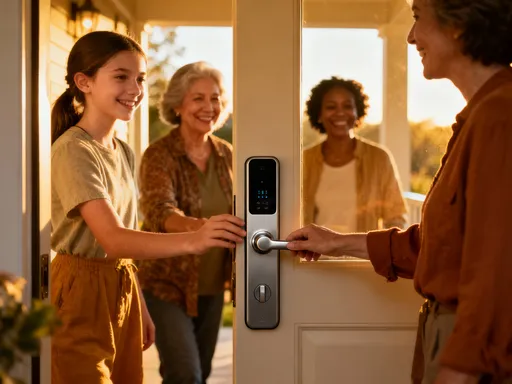
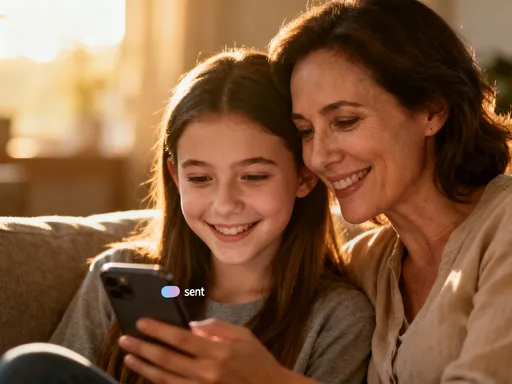
Take geofencing, for example. It sounds technical, but it’s actually simple. You set up a virtual boundary around a place—like your home, your child’s school, or your parent’s apartment. When someone’s phone or device enters or leaves that area, you get a quiet notification. No need to text 'Did you get there okay?'—the system lets you know automatically. I set this up for my son’s school drop-off. Now, when his phone crosses the geofence around the school, I get a soft chime on my phone that says, 'Alex has arrived at school.' No typing, no waiting, no anxiety. Just peace of mind in one sentence.
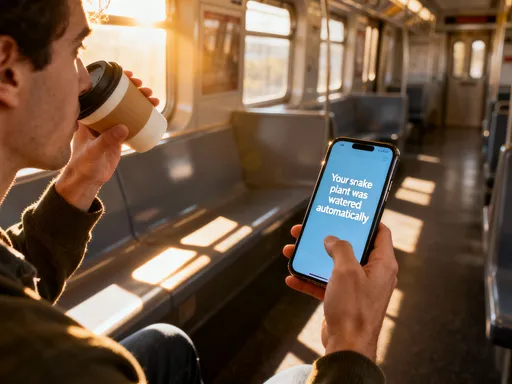
And it’s not just about arrivals and departures. We also use automated routines for things like medication reminders. My mom takes several prescriptions a day, and while she’s very independent, I used to worry she might forget. Instead of calling her every morning and evening, we set up a smart speaker in her kitchen that gently reminds her at the right times. If she takes her pills and says, 'Remind me tomorrow,' the system marks it done. If she doesn’t respond, I get a quiet alert. It’s not about watching her—it’s about supporting her independence while knowing I’ll be informed if something’s off.
Another game-changer has been the shared family calendar that updates in real time. If my husband has a meeting that runs late, it adjusts automatically, and I get a notification that dinner might be delayed. If my daughter has a last-minute piano lesson, it shows up on everyone’s phone. No more double-booking, no more missed events. These small, seamless updates have taken so much mental load off my shoulders. I’m not the family secretary anymore—I’m just Mom, who can actually enjoy dinner without worrying if someone’s going to show up.
Block Time Planning: Designing Calm Into Your Day
Once we had the right tools in place, the next step was figuring out when to engage with them. Because even the best technology can become overwhelming if it’s always demanding your attention. That’s when I discovered time blocking—not just for work, but for family care. The idea is simple: instead of reacting to every alert as it comes, you set specific times to check in with your family systems. It’s like creating designated 'care windows' in your day.
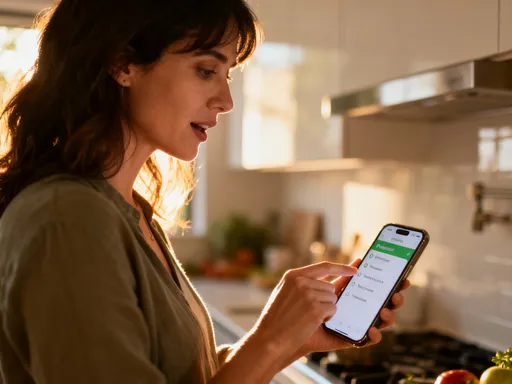
I start with a morning routine. After I make coffee, I spend five minutes reviewing the family dashboard on my tablet. I check if everyone got home safely the night before, if any medication reminders were missed, and if there are any schedule changes for the day. It’s not frantic—it’s intentional. Then, I mute non-urgent notifications until my next check-in window, which is after dinner. During that time, I don’t look at location updates or message threads unless it’s an emergency alert. This small shift has been transformative. I’m no longer jumping every time my phone buzzes. I’m in control of my attention, not the other way around.
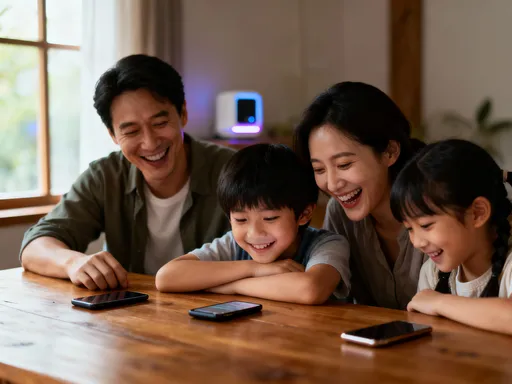
Dinner time used to be chaotic—me glancing at my phone every two minutes, asking, 'Where’s your brother?' or 'Did Grandma eat yet?' Now, I know that if anything urgent comes up, I’ll be notified. Everything else can wait. We’ve made a rule: phones go face down during meals unless someone gets an alert. And guess what? We actually talk now. We laugh. We share stories. I’m not mentally elsewhere. I’m right here, at the table, with the people I love most.
Time blocking also helps with self-care. I’ve scheduled 20 minutes every afternoon for a walk—no devices, just me and the neighborhood. I used to feel guilty taking time for myself, like I was neglecting my family. But now I see it differently. When I’m less stressed, I’m a better mom, a better daughter, a better partner. And the technology supports that. It holds the space so I can step away, knowing I’m not missing anything important.
Building Your Family’s Rhythm: A Step-by-Step Guide
If you’re thinking, 'This sounds great, but where do I start?'—I’ve been there. It felt overwhelming at first. But the truth is, you don’t need to do everything at once. Start small. Pick one area of stress—maybe it’s not knowing when your kids get home from school, or forgetting to check in with an aging parent. Focus on that one thing and find a simple tech solution that addresses it.
First, choose tools that respect privacy. Look for apps and devices that let you control who sees what, and that don’t store data unnecessarily. We use a family safety app that allows each person to opt in and set their own sharing preferences. My son can choose to share his location only during school hours. My mom can decide which reminders she wants me to see. It’s not about control—it’s about consent and trust.
Next, have a family conversation. Sit down together and talk about what everyone needs and feels comfortable with. Ask questions like, 'What would help you feel safer?' or 'When do you want to be checked on?' Listen more than you talk. This isn’t about imposing a system—it’s about creating one together. We had this talk over pizza one Friday night, and it turned into one of our best family discussions. My daughter said she’d feel better if she could send a quick 'I’m home' alert with one tap. So we set that up. My husband admitted he forgets to charge his phone, so we got him a smart charging pad that glows when it’s time to plug in.
Then, automate what you can. Set up geofence alerts for school, work, and home. Program medication reminders. Sync calendars. Test them for a week and adjust as needed. The goal isn’t perfection—it’s progress. We had a few hiccups at first—my mom accidentally turned off her reminder system, and I got a false alarm when my son went to a friend’s house outside the usual route. But we laughed about it. We tweaked the settings. And now, it runs smoothly.
The most important part? Keep it simple. You don’t need the most expensive system or the fanciest gadgets. You need consistency, clarity, and care. Small changes—like a single automated check-in or a shared calendar update—can reduce hours of mental load over time. And when your family feels seen and supported, without constant nagging or checking, something beautiful happens: you all start to relax.
When Tech Fades Into the Background, Life Comes Forward
There’s a moment I’ll never forget. It was a rainy Tuesday evening. My son was doing homework at the table, my daughter was sketching in her notebook, and my husband was chopping vegetables for soup. I was stirring a pot, listening to the rain, and for the first time in years, I wasn’t thinking about what I might be missing on my phone. No pings, no alerts, no mental checklist. Just us, together, in the quiet hum of a regular evening. And then it hit me—I wasn’t waiting for a notification to tell me everyone was okay. I already knew. Because the system was working, and I was free to be present.
That’s the magic of well-designed family security. It doesn’t take over your life—it gives it back. You stop managing fear and start living. You stop chasing updates and start connecting. I’ve had friends tell me similar stories: a woman who no longer calls her sister every night to check on their mom, because the smart home sensors gently confirm she’s moving around as usual; a dad who finally stopped texting his college daughter every hour, because he gets a simple 'She’s in class' update through their shared routine app.
These aren’t grand moments. They’re quiet victories. But they add up. They mean more eye contact, more laughter, more deep breaths. They mean you can focus on your work project without wondering if the kids got home. You can enjoy a cup of tea while your parent watches their favorite show, knowing the fall-detection sensor is on in case they need help. You can go to bed without scrolling through apps, because you’ve already received the 'All safe' summary for the day.
Technology, when used with intention, doesn’t have to pull us apart. It can help us stay close—without the constant noise. It becomes less like a job and more like a quiet promise: I’ve got you. You’re safe. You’re loved.
Peace of Mind Isn’t Found—It’s Designed
We often think of peace of mind as something that happens when the kids are older, when the parents are healthier, when life slows down. But what if we don’t have to wait? What if we can design peace into our lives, right now, with the tools we already have? That’s been my biggest realization. Safety isn’t about constant vigilance. It’s about creating systems that reflect our values—care, trust, independence, and love.
Reimagining family security isn’t about buying more gadgets or learning complex tech. It’s about shifting our mindset. It’s about moving from a culture of checking to a culture of caring. From anxiety to assurance. From interruption to integration. When technology works quietly in the background, it doesn’t replace human connection—it protects it. It gives us the space to be fully present, to listen, to breathe, to live.
And that, more than any alert or notification, is what I want for my family. I want us to feel safe, not because we’re being watched, but because we’re supported. I want us to stay connected, not through constant pings, but through shared rhythms and quiet trust. I want to raise my kids in a home where care feels like warmth, not worry. Where growing up doesn’t mean being monitored, but being loved with confidence.
So if you’re feeling stretched thin, if you’re tired of carrying the weight of constant check-ins, I want you to know there’s another way. Start small. Choose one thing. Build one routine. Have one conversation. Let technology do the remembering, so you can do the loving. Because the best security system isn’t the one with the most features—it’s the one that lets you forget it’s there, so you can remember what really matters.